



How Trade Policy Uncertainty is Disrupting Retail Hiring


The retail sector, like much of the rest of the economy, is in a holding pattern, waiting for tariff policy to clarify and the path ahead to become clear. Retailers face unique challenges even in the best of times: high turnover, issues that arise in high-volume hiring, and season-driven demands, to name a few. And these are far from the best times.
Many retailers are uncertain about the timing and true levels of tariffs, given the several months of stalling and deal-making from the Trump administration. Plus, companies attempted to get ahead of levies by increasing imports in the first quarter and are now dealing with a surplus of goods. To top it all off, consumers are feeling a bit blue, which has real effects on their spending patterns.
Here, I’ll examine what this means for recruiters in the retail industry, and how their responsibilities may transform in the remainder of 2025.
What’s Shaping Retail Hiring
In June, the retail sector added just 2,400 net new jobs after posting a loss in May. The three-month moving average of employment growth in the sector is completely flat. Retail hiring has been unpredictable, especially in the post-pandemic period. Early in 2025, hiring surged, perhaps to get ahead of the tariff news, but those gains haven't sustained as the year progressed.
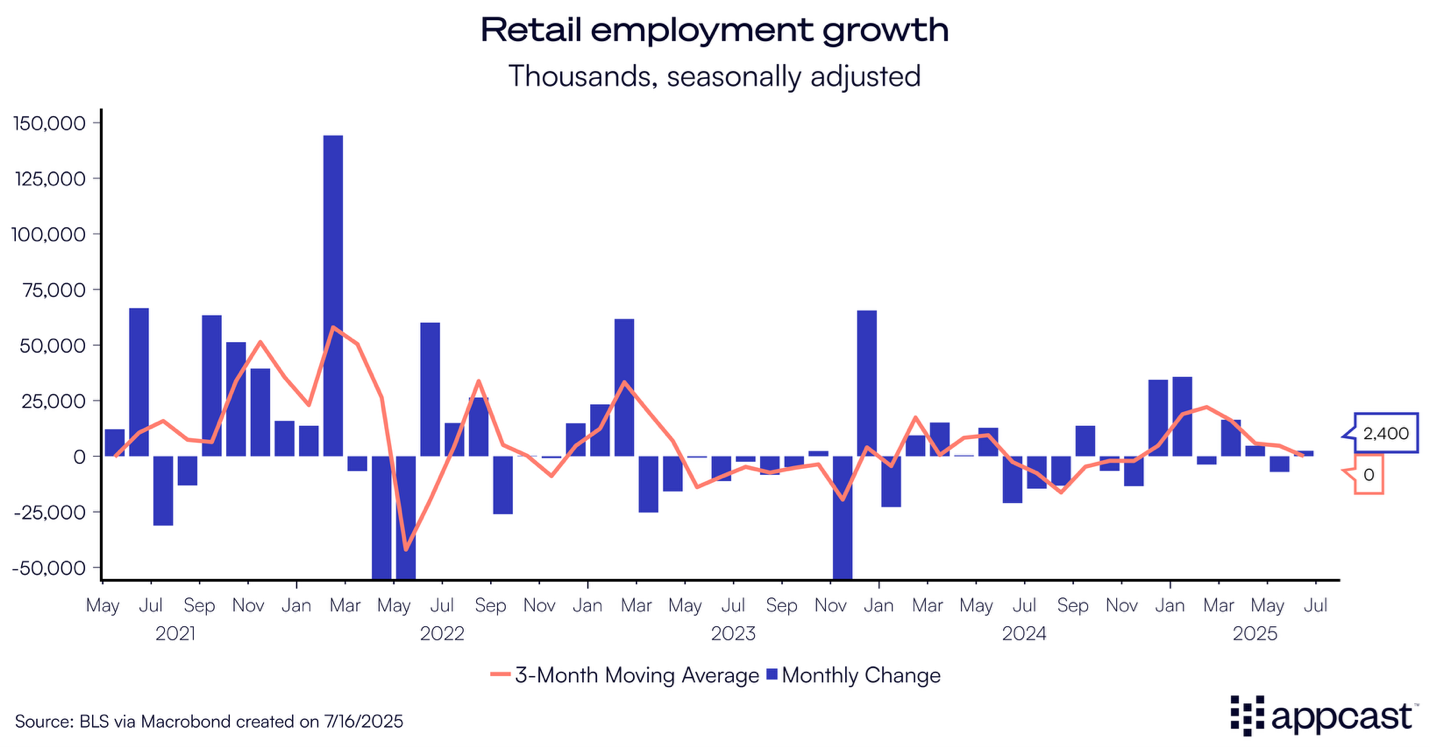
It's difficult to build and execute reliable workforce plans when even the pricing of basic goods is unclear. Employers are approaching this situation cautiously, increasing workforce cuts and decreasing hiring plans.
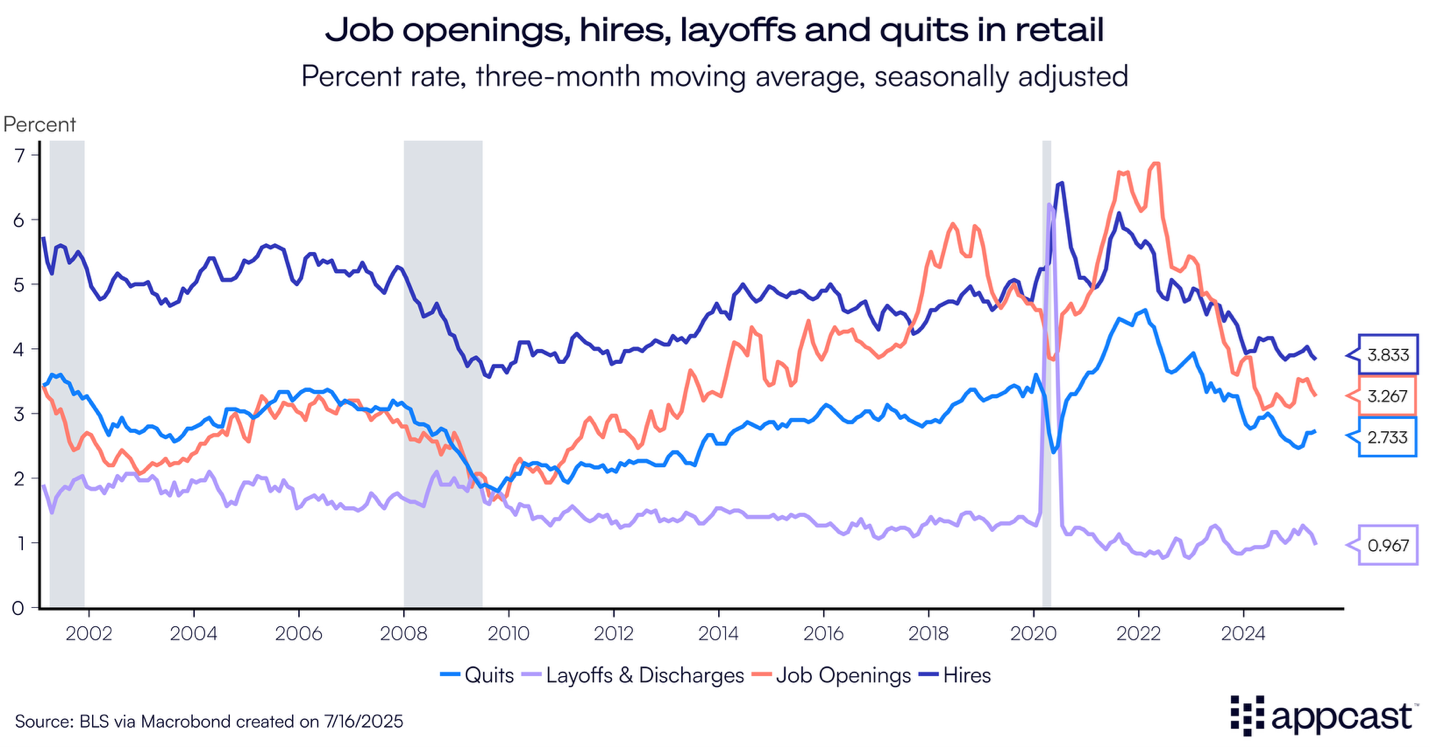
The average effective tariff rate is already the highest it's been since 1920; when further tariffs went into effect on August 1, that only became worse. This increased tariff rate has yet to impact the inflation rate, and so far, consumers have had a muted response to it, with retail spending declining in May and then rebounding in June. If retailers begin to pass on costs to consumers and spending falters, hiring plans will suffer even further. We already see the impacts of less dependable consumer spending and tariff uncertainty on job openings within the retail sector. The openings rate is far below February 2020 levels. In fact, it's closer to levels seen during the slow recovery following the Great Recession.
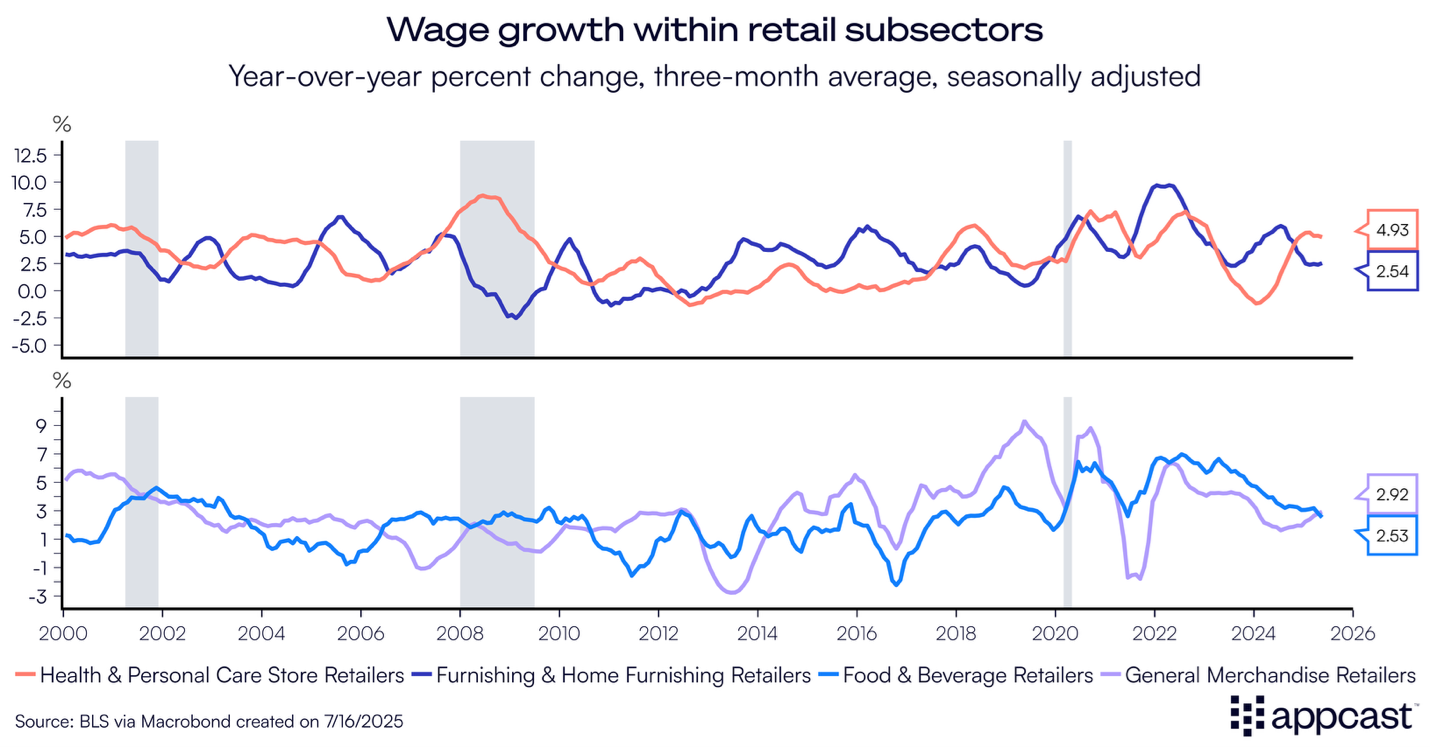
For most retail subsectors, wage growth has tapered around 2 percent to 3 percent, reflecting the lower demand for labor in the sector. For health and personal care store retailers, wage growth has steadied around 5 percent for the year.
Managing Workforce Planning Amid Uncertainty
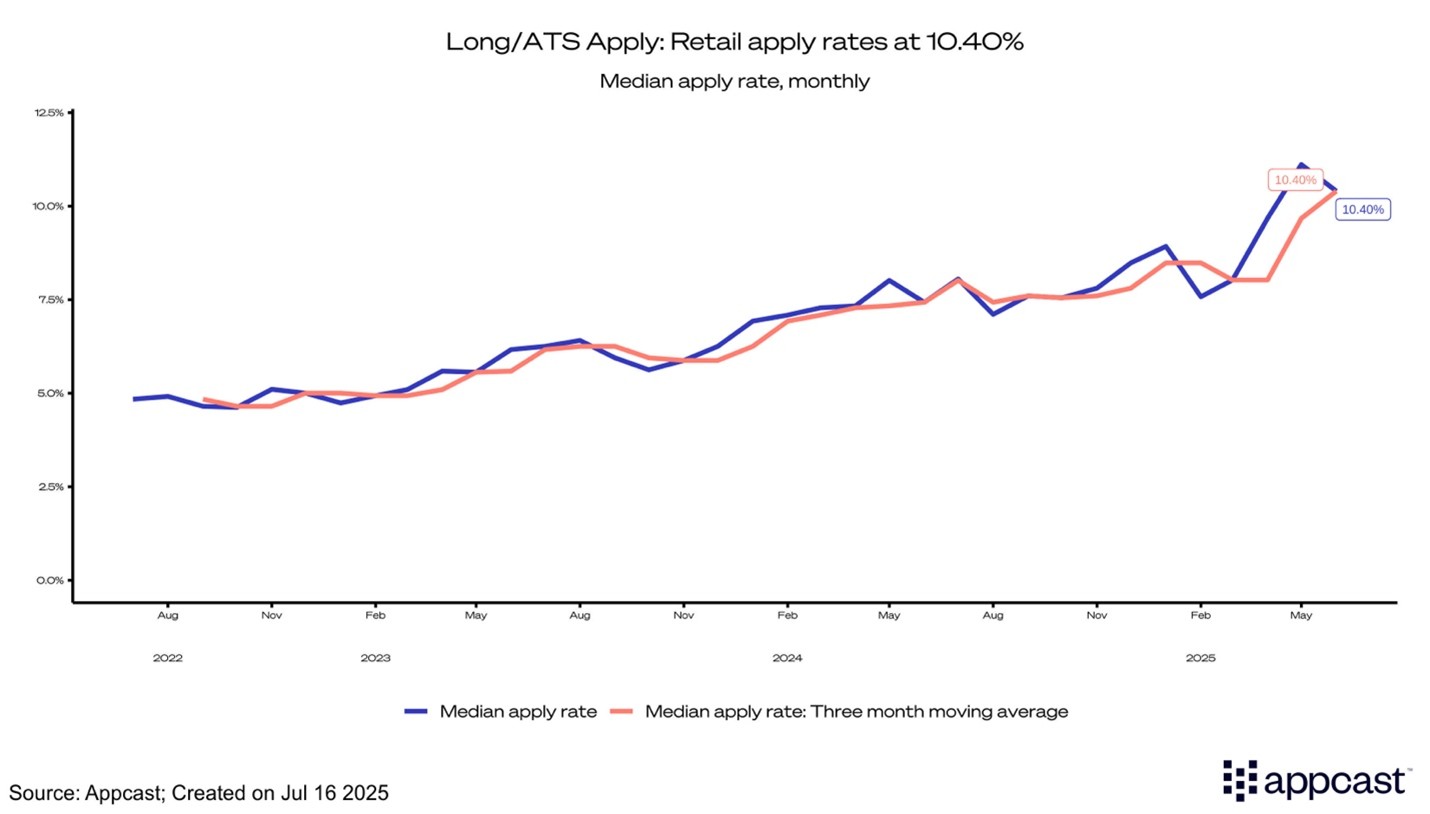
All this uncertainty in trade policy drags heavily on retailers and complicates hiring plans. However, there is a bright spot: job seeker interest is high, with application rates at their highest point in years (this also means that there are fewer job ads out there).
Planning out hires a year or even six months ahead may be difficult, as we don't know how consumers will respond to tariffs, or even how high the actual level of tariffs will be. But ignoring the issue isn’t a strategy. Retailers must prepare for what's ahead: A period of adjustments as consumers adapt to higher prices may slow hiring.
That said, consumers have been remarkably resilient through a pandemic, years of inflation, and increased interest rates. Tariffs may just be another thing they're preparing their pocketbooks for.
Liz Anderson is a content strategist at Appcast, the leading recruitment marketing platform powered by programmatic.
- Categories:
- Hiring
Liz Anderson is a content strategist at Appcast, the leading recruitment marketing platform powered by programmatic. She writes about recruiting and labor market trends, including recruitment benchmarks and demographic trends. She holds a B.S. in economics and a B.A. in history from the University of Vermont.


