Supreme Court Strikes Down Trump's Tariffs, Retail Industry Impacted
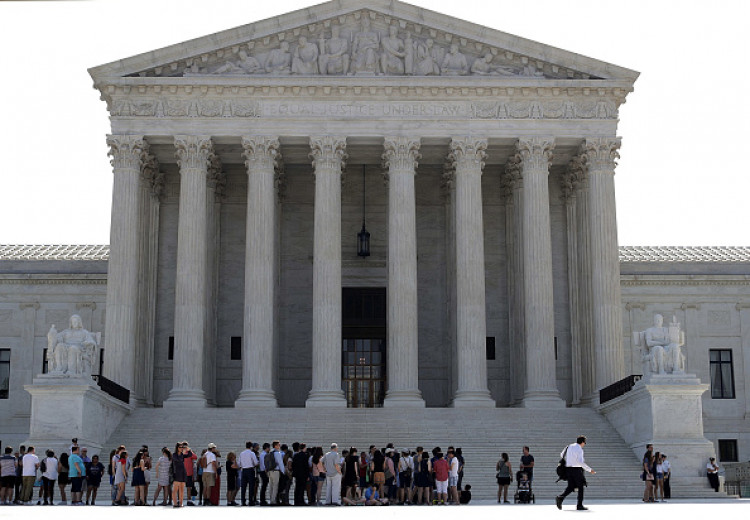

The U.S. Supreme Court said President Trump's tariffs policies imposed under the International Emergency Economic Powers Act (IEPPA) are unconstitutional, dealing a major blow to the president's signature economic policy. Chief Justice John Roberts wrote the 6-3 opinion. Justices Clarence Thomas, Samuel Alito and Brett Kavanaugh dissented. Writing for the court's majority, Chief Justice John Roberts said Trump lacked the peacetime authority to use IEPPA to pose tariffs. What remains to be seen is whether the United Sates may be required to refund billions of dollars to importers, including retailers, that paid the IEEPA tariffs.
Total Retail's Take: This ruling from the Supreme Court has been eagerly awaited. Now that we have a decision, the question becomes how will it impact the retail industry. Total Retail received feedback from various sectors of the industry. Here is some of the reaction to the Supreme Court's ruling and what it means for the retail industry:
“The Supreme Court’s announcement regarding tariffs provides much-needed certainty for U.S. businesses and manufacturers, enabling global supply chains to operate without ambiguity. Clear and consistent trade policy is essential for economic growth, creating jobs and opportunities for American families. We urge the lower court to ensure a seamless process to refund the tariffs to U.S. importers. The refunds will serve as an economic boost and allow companies to reinvest in their operations, their employees and their customers.” — David French, Executive Vice President of Government Relations, National Retail Federation
"There was always an expectation in the market that the tariffs could be challenged, and potentially struck down, but what actually happens next depends entirely on how quickly the administration responds. If they move to reinstate tariffs under new authority, this becomes a short-lived headline. If they don’t, then we’re in unprecedented territory. Refunds, if they happen at all, could take months or even years to materialize.
"No serious operator is building their year around a potential tariff refund. The process would be complex and paperwork-heavy, and most companies have already adjusted to the new cost structure. The bigger shift isn’t tariffs, it’s the end of de minimis. That’s a structural, global change in how cross-border commerce works.
"Tariffs can come and go. What’s fundamentally changed is the elimination of de minimis. That’s the rule that once allowed low-value goods to move across borders duty-free. With the U.S., U.K., and EU all tightening those thresholds, duties and taxes are now embedded into global commerce in a way that’s unlikely to reverse. That’s the real reset.
"Most businesses have already internalized higher costs across shipping, compliance, and supply chain operations. There isn’t a hidden 30 percent margin waiting to be unlocked if tariffs disappear tomorrow. Logistics costs, manufacturing shifts, and regionalization decisions have already been priced in. Companies have used this period to diversify suppliers, regionalize distribution, and de-risk their operations." — Juan Pellerano-Rendón, Chief Marketing Officer, Swap
"Retailers need to arm themselves with the data, technology and capabilities to move nimbly as the tariff situation evolves. As cost and competitive positions shift, the retailers that are prepared and have the right analytics to adjust pricing and promotions to best meet the needs of their customers will continue to win market share, loyalty, and new customers in this highly disruptive environment.” — Matt Pavich, Senior Director, Strategy and Innovation, Revionics
"The decision reinjects substantial uncertainty over trade policy and the tariff rates that will be paid by retailers and brands.
"There is a potential upside to this uncertainty, in that it reduces the probability of full tariff implementation, but with the expectation that this Supreme Court decision will be challenged. While the Supreme Court's ruling is significant, it's unlikely to resolve the tariffs issue entirely. There are widespread expectations that the U.S. government will continue to pursue tariffs or attempt to circumvent the ruling.
"Retailers and brands have spent the past year planning for currently announced tariffs, which now effectively become the worst-case scenario.
"On the consumer side, we saw negative reactions to the tariffs news flow in 2025. However, the Supreme Court judgement, in theory, represents a removal of tariffs and, so, could have a reverse (i.e., positive) effect. Around two-thirds of consumers (65.6 percent) hold significant concerns that new tariffs increase the price of goods." — John Mercer, Head of Global Research, Coresight Research
“The Supreme Court has just unleashed chaos. The first thing many brands and retailers will be asking is how they get their money back. They’ve paid billions of dollars in tariffs over the past few months. Nobody knows what that process will look like or if the government will pay up.
“One thing is clear: The big e-commerce beasts like Amazon.com and Walmart have proven themselves capable of playing tariff roulette. They know exactly where their supply chains reach, what taxes they will pay, and they have the scale to choose where they absorb costs and where they pass them along to the consumer. But smaller players will continue to feel the pain. Their capacity to absorb costs is much more limited, and simply calculating customs duties is a time suck many cannot afford.“ —Anthony Ferry, CEO, Wayvia
- Categories:
- Legal
- Product Sourcing
- Supply Chain
Joe Keenan is the editor-in-chief of Total Retail. Joe has nearly 20 years experience covering the retail industry, and enjoys profiling innovative companies and people in the space.