2026: The Year In-Store Media Becomes Real-Time, Responsive, and Radically More Creative
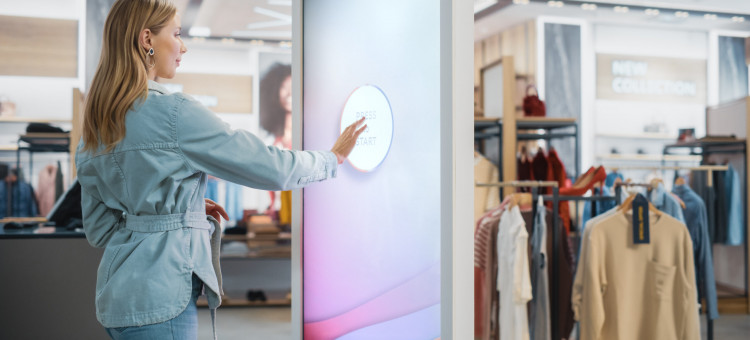

Retailers spent the past few years modernizing e-commerce and loyalty programs. 2026 is the year in-store experiences get the same treatment.
Two shifts will reshape in-store media: artificial intelligence-powered dynamic content informed by real-time signals, and talent driving innovation with curiosity instead of convention. Together, these forces will close operational gaps between marketing and merchandising, reduce inefficiencies from static content, and reimagine how shoppers experience the store.
Retailers that embrace both AI capabilities and forward-thinking talent will move faster than competitors stuck in legacy workflows. This is the year in-store media becomes responsive, relevant, and increasingly profitable.
AI Can Reduce Friction in Out-of-Stock Moments
One of retail's biggest disconnects has always been the gap between marketing and merchandising. Static in-store content runs on autopilot, promoting products that sold out hours ago or ignoring overstock that needs to move. Shoppers get frustrated, impressions get wasted, and spend becomes inefficient.
AI-powered systems introduce the ability to inform in-store media using inventory levels, demand patterns, and merchandising priorities. Rather than relying on rigid schedules, retailers can adjust content strategies with greater flexibility, deciding when to reinforce brand messaging, shift creative emphasis, or spotlight available products. When every impression aligns with what's actually happening in-store, shoppers get more relevant experiences, brands see stronger return on investment, and retailers unlock new operational efficiency.
The technology already exists. The next step is connecting data, creative and in-store systems to make dynamic, inventory-aware media the standard. Inventory distortion costs retailers an estimated $1.73 trillion annually, according to IHL Group. While AI-driven inventory management delivers measurable gains — with retailers using these systems achieving sales growth 2.3 times higher than competitors — its role in in-store media is still evolving. Retailers that connect these signals thoughtfully will deliver more responsive, strategically sound in-store experiences.
The Future of In-Store Media Belongs to the Curious, Not the Conventional
Integrated AI systems only work when talent knows how to ask the right questions and build smarter workflows around them. The skillset required for in-store retail media is shifting to where this work is no longer about knowing screens or audio. Retailers must understand the full omnichannel ecosystem, where data and creative inform each other and customer experience sits at the center.
However, having the right technology means nothing without the right mindset. Legacy thinking holds retailers back. "This is how we've always done it" doesn't cut it anymore. The next generation of leaders will dig into performance data, ask tough questions, and push for solutions grounded in outcomes rather than preference. Curiosity encourages experimentation, cross-functional collaboration, and new revenue pathways that conventional approaches miss entirely.
Innovation requires people who see the industry through different lenses. Talent from adjacent fields — content creation, digital media, e-commerce, entertainment — bring the creativity needed to evolve the in-store experience. As Ace Hardware's recent retail media buildout demonstrates, breaking down silos between merchants and media teams creates environments where innovation actually scales.
Retailers must marry advanced technology with forward-thinking, curious talent to avoid falling into the trap of operating old models like their competitors.
Why Execution Defines Retail Success in 2026
The difference between leaders and laggards in 2026 comes down to execution. AI will make in-store media more accurate than ever, but accuracy alone isn't enough. Curious talent ensures it's also more creative and connected to the broader retail ecosystem.
Retailers that embrace both sides of this transformation will set a new standard for what the in-store experience can deliver. More responsive, context-aware in-store media will become the norm. The retailers that move fastest will define what shoppers expect from every store.
Toni Restrepo is the vice president of retail media networks at ISM, where she leads strategic initiatives to help brands maximize their investments and thrive in the evolving retail media landscape.
Toni Restrepo is the vice president of retail media networks at ISM, where she leads strategic initiatives to help brands maximize their investments and thrive in the evolving retail media landscape. Prior to joining ISM, Toni served as Senior Manager of the Partner Solutions Group at Roundel. As the founder of TLR Media Consulting, Toni leverages her deep expertise in retail media, signage, buyer negotiations, and promotions to empower brands to excel in the competitive RMN space. Her diverse background provides her with a unique understanding of the entire retail ecosystem.